MMT Token’s Meteoric Rise and Sharp Correction: What’s Next for the Momentum Project?
What Is $MMT and Why It Exploded on Launch
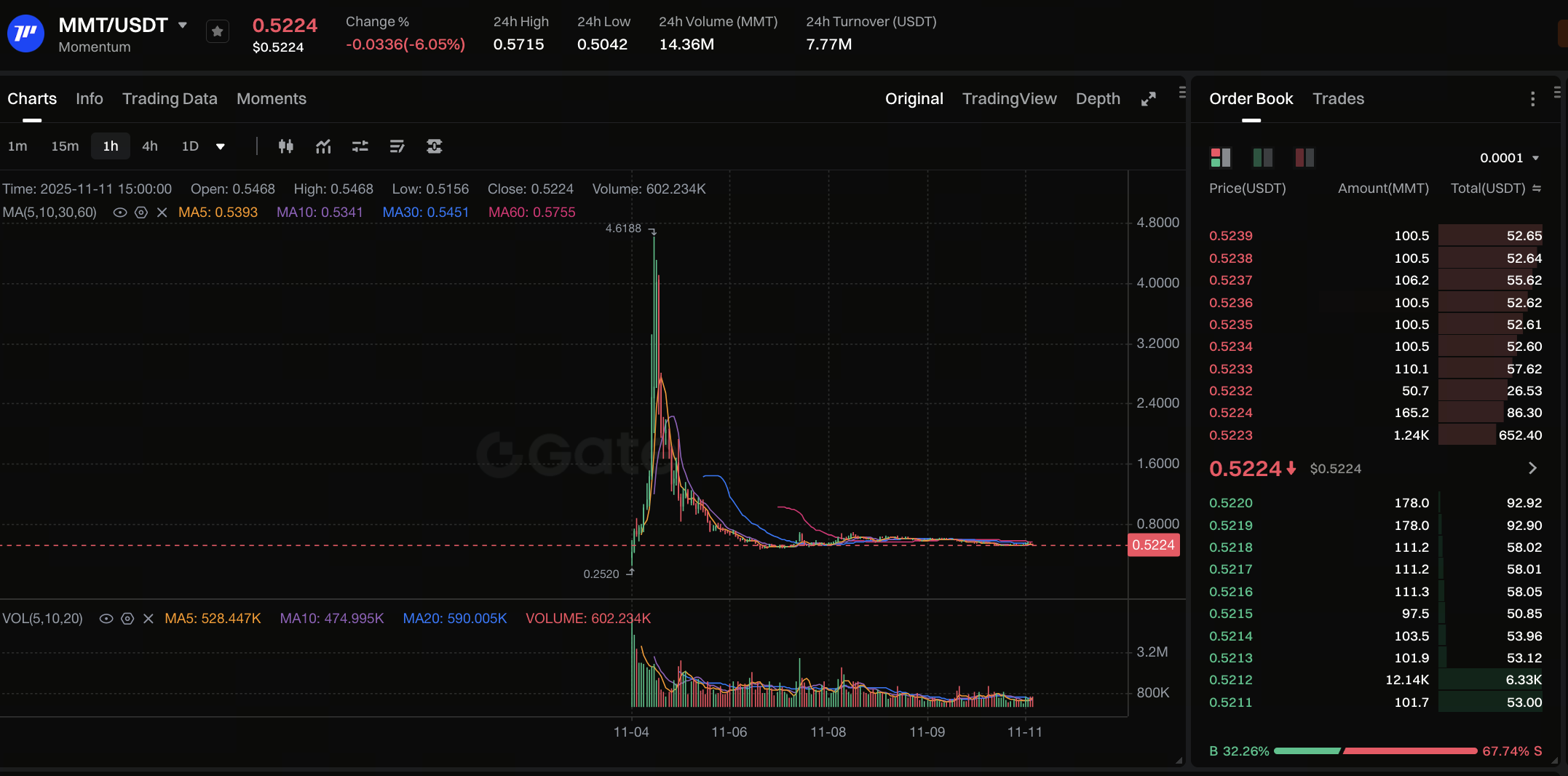
Momentum ($MMT) is a DeFi token built within the Sui ecosystem, designed to power a next-generation decentralized trading platform. It officially launched on November 4, 2025, with simultaneous listings on major exchanges such as Binance, Bitget, and OKX.
The multiple listings generated immediate hype — MMT’s debut price around $0.10 quickly surged to nearly $4, a stunning gain of over 3000% within the first trading day. The launch included a Binance-backed BNB airdrop of 7.5 million MMT, further amplifying awareness and liquidity.
However, just days later, MMT’s price tumbled to around $0.53, an 86% decline from its all-time high, reflecting the typical “launch spike” followed by market correction.
The Story Behind the 1000% Surge
MMT’s explosive start was no coincidence. Several factors contributed to the early price boom:
Simultaneous listings on major global exchanges boosted confidence and accessibility.
Strong investor narrative built around MMT being a “DeFi 2.0 liquidity layer.”
Pre-launch marketing and community hype through Telegram and X (Twitter) channels.
Airdrop incentives for BNB and veMMT holders created short-term buying pressure.
The combination of visibility, FOMO, and a capped early circulating supply (around 200 million tokens out of a 1 billion total) triggered a parabolic price move.
Understanding MMT Tokenomics and Buyback Mechanism
MMT’s tokenomics are central to its long-term viability. The project introduces a buyback and redistribution model, where a portion of platform revenue is used to repurchase MMT from the open market and distribute rewards to veMMT holders — users who stake or lock their tokens.
Key Tokenomics highlights:
Total supply: 1,000,000,000 MMT
Initial circulating supply: ~200 million
Buyback fund: Part of platform profits used to purchase MMT for redistribution
Burn mechanism: A share of tokens from each buyback permanently removed from supply
This model mirrors traditional “dividend stock” logic but in a DeFi format. If the trading platform gains real user traction and generates consistent fees, these buybacks could tighten supply and reward loyal holders.
However, the effectiveness of this mechanism depends entirely on execution transparency — whether buybacks and burns actually occur and how much revenue the platform produces.
Why the Correction Happened
Despite the hype, the sharp correction that followed was almost inevitable:
Over-leveraged speculation — many traders chased the pump, then got liquidated when momentum faded.
Profit-taking from early investors, especially private-round participants.
Limited short-term utility — the platform was not yet fully launched, reducing organic demand.
Broader market pullback — BTC and other major coins were in consolidation, cooling sentiment.
This combination triggered cascading sell orders, cutting MMT’s market cap from over $2 billion to around $300 million in just one week.
Can Momentum (MMT) Recover? Key Indicators to Watch
Despite the drawdown, some analysts believe $MMT could stage a recovery if it delivers on its roadmap. Key signals to monitor include:
Buyback and burn frequency — regular updates would prove real revenue flow.
Trading volume on Momentum’s DEX — strong user activity would validate its DeFi model.
New exchange listings or partnerships — could expand liquidity and renew interest.
Staking rewards for veMMT holders — transparency in payout data can boost confidence.
At present, MMT trades near $0.52 with gradually stabilizing volume. If upcoming product milestones — such as the Momentum DEX V1 launch — succeed, the token could regain traction.
Final Thoughts: From Speculation to Sustainability
The MMT launch was a textbook example of “hype-driven price discovery” in crypto markets. Massive exposure, strategic listings, and clever marketing can ignite short-term rallies, but long-term sustainability depends on real fundamentals.
Momentum’s future hinges on two things:
Execution consistency — actual buybacks, burns, and user adoption.
Community confidence — continued engagement and transparent reporting.
If the project can prove revenue generation and maintain liquidity, $MMT might evolve from a speculative token into a genuine DeFi yield asset. Until then, cautious optimism — not blind enthusiasm — should guide investors.
Disclaimer:
This is not investment advice. This information is provided for informational purposes only and should not be construed as a recommendation to buy, sell, or hold any asset. Cryptocurrency trading involves a risk of loss. Gate US services may be restricted in certain jurisdictions. For more information, please see our legal disclosures: https://us.gate.com/legal/disclosures
Share
Content


Related Articles

Bitcoin Halving Chart: Key Dates, Trends, and Future Predictions

Bitcoin Halving Chart:Understanding the Changes in Bitcoin Supply and Price Trends

US December Rate Cut Forecast: Will the Federal Reserve Finally Pivot?

Federal Reserve Ends Quantitative Tightening — How the End of QT Could Reshape Global Markets in 2025

Midnight Network Ignites Cardano’s Next Chapter with NIGHT Token Mining and Privacy Innovation