


Lesson 4
How Do ETF Leveraged Tokens Differ from Spot, Margin, and Futures Trading?
Compare ETF leveraged tokens with traditional trading methods to understand their unique features.
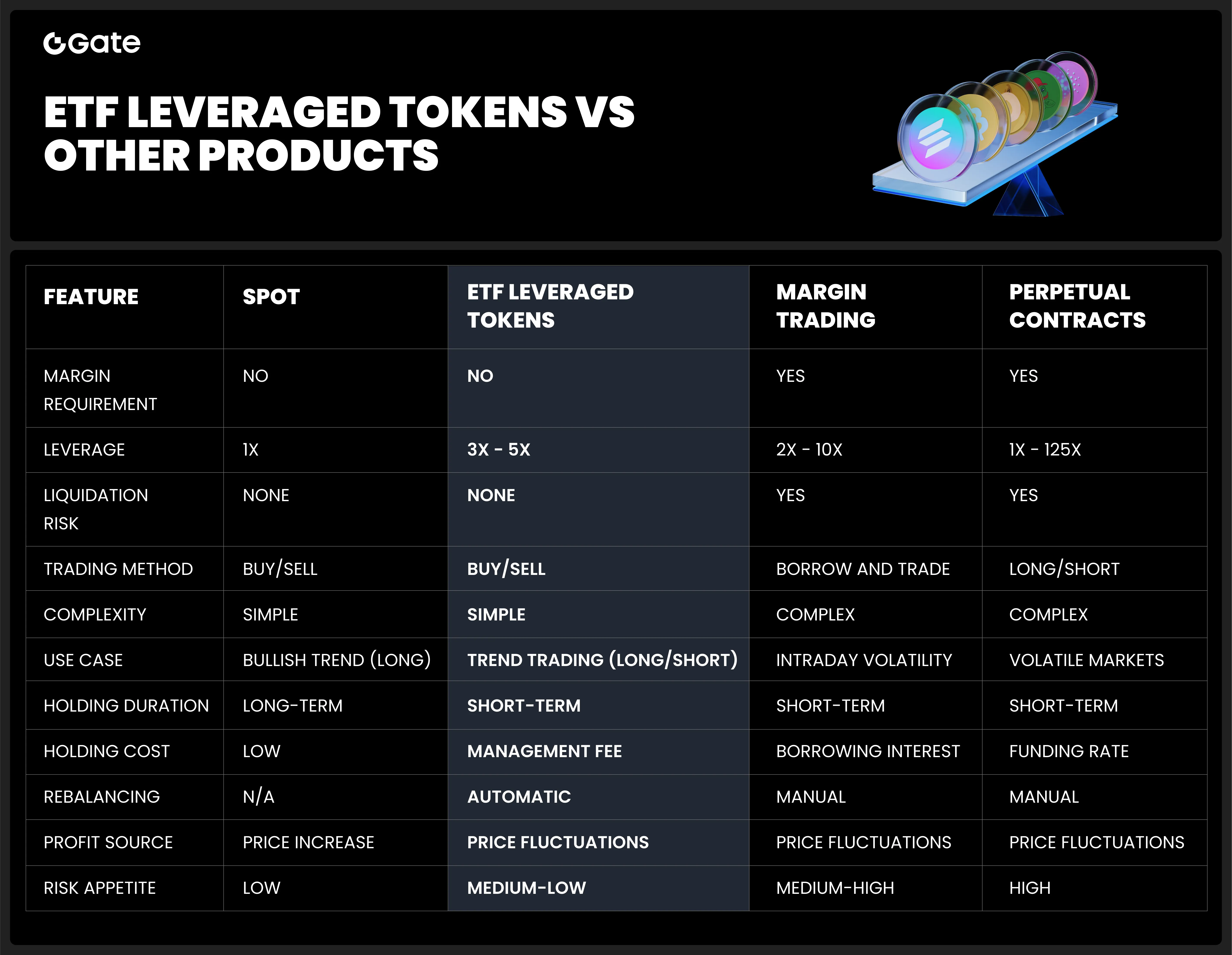
- Spot Trading: Users buy and sell cryptocurrencies using fiat or stablecoins (e.g., USDT) and immediately receive ownership of the asset.
- Margin Trading: Users borrow funds to amplify their position size, increasing both potential gains and losses. Leverage is determined by the borrowed amount relative to the user’s collateral.
- Futures Trading: Users trade derivative contracts with leverage, which dynamically adjusts based on position value. High leverage increases the risk of liquidation if the margin is insufficient.
- ETF Leveraged Tokens: These tokens have built-in leverage, amplifying asset price movements without requiring margin or borrowing. Users can trade them like spot assets without worrying about liquidation.
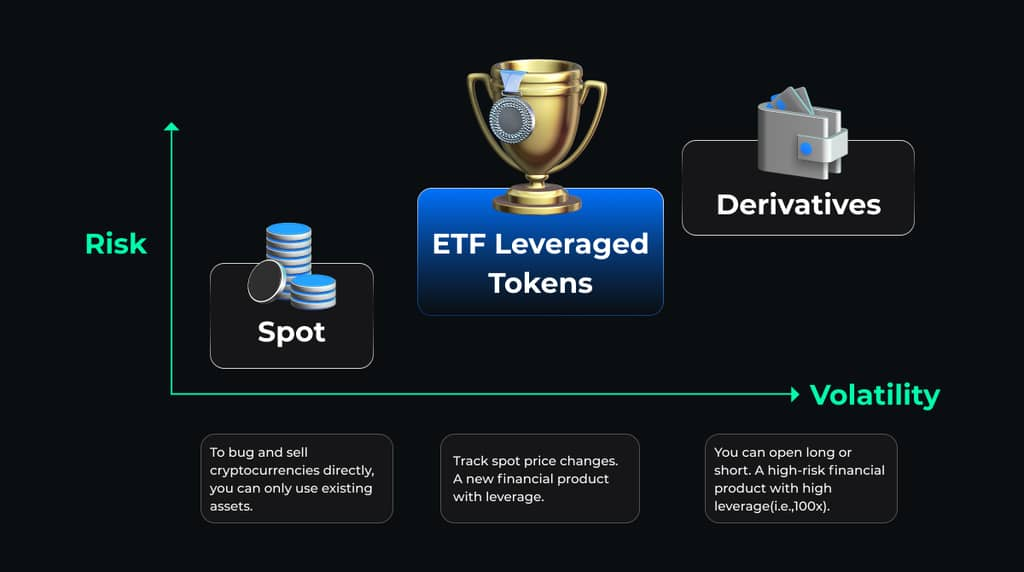
Performance Comparison: Spot, Futures, and ETF Leveraged Tokens in Different Market Conditions
Disclaimer
This is not investment advice. This information is provided for informational purposes only and should not be construed as a recommendation to buy, sell or hold any asset. Cryptocurrency trading involves a risk of loss.
Gate US services may be restricted in certain jurisdictions. For more information, please see our legal disclosures: https://us.gate.com/legal/disclosures
Catalog
Lesson 1:ETF Leveraged Tokens Introduction
03 min
0 enrolled
Lesson 2:Pros and Cons of ETF Leveraged Tokens
0 enrolled
Lesson 3:What market conditions are ETF leveraged Tokens suitable for?
0 enrolled
Lesson 4:How Do ETF Leveraged Tokens Differ from Spot, Margin, and Futures Trading?
0 enrolled
Lesson 5:How to trade ETF leveraged tokens?
0 enrolled
Related Courses

Beginner
Introduction to Celestia Blob Markets & Rollkit
Celestia represents a fundamental redesign of blockchain architecture through its modular approach. Instead of requiring every blockchain to handle execution, settlement, consensus, and data availability within a single system, Celestia separates these functions into specialized layers. This allows developers to create sovereign and application-specific blockchains that outsource data availability and consensus to Celestia while retaining full control over their execution environments.